The contract is a template from 2014: terms that protect you today
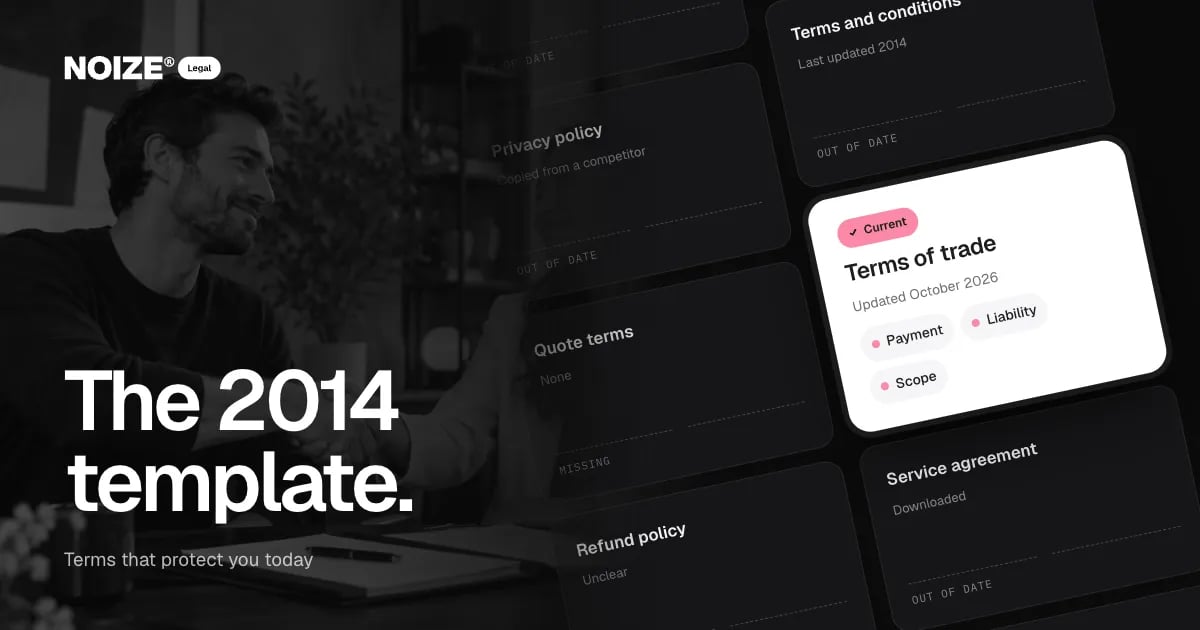
The terms and conditions were downloaded in 2014. The service agreement came from a template site. The privacy policy was copied from a competitor and lightly edited. Quotes go out with no terms at all. The refund policy depends on who answers the phone.
The contract is a template from 2014. Many businesses are trading today on documents written for a different business, in a different market, years ago. They rarely cause trouble until the day a customer disputes an invoice, a project runs over scope or something goes wrong. Then they matter enormously.
The short version
- A regular contract review keeps your terms in line with how the business sells today.
- Terms of trade should reflect how your business actually sells today: online orders, subscriptions, deposits, project scope, cancellations, liability, intellectual property and payment terms.
- Old templates miss new risks.
- Updating them reduces disputes, speeds up payment and sets clear expectations before work begins.
- Good terms protect the business without slowing down sales.
- NOIZE provides administrative support and business strategy.
- Where work is outside our skillset, or the law requires it, we make sure an appropriately qualified professional is involved.
Why old terms miss new risks
01New ways of selling
Online checkout, subscriptions, digital products and remote services didn't exist in many old templates.
02Changing law
Australian Consumer Law, privacy obligations and unfair contract terms rules affect what terms can say and how.
03Changed business
The services, pricing models and customers are different from when the terms were written.
04Generic templates
Downloaded terms often don't fit the business's industry, risks or processes.
The clauses that matter most
01Scope
Exactly what is and isn't included. Scope disputes are among the most common commercial disagreements.
02Payment
Deposits, due dates, late payment consequences and what happens when invoices aren't paid.
03Changes and variations
How extra work is requested, quoted and approved.
04Cancellation and refunds
What happens if either party ends the arrangement, consistent with consumer law.
05Liability
Reasonable limits on what the business is responsible for, within what the law allows.
06Intellectual property
Who owns the work produced, and when ownership transfers.
07Privacy and data
How customer information is handled, linked to an accurate privacy policy.
08Disputes
How disagreements are raised and resolved before they escalate.
> I've signed and sent thousands of agreements across my businesses. The disputes I remember weren't about bad clients. They were about something our terms didn't cover, so both sides had a reasonable but different view. Clear terms turn arguments into a quick reference to page two.
“What I appreciated most was them pushing back when it mattered.”
Updating without slowing sales
Terms should make it easier to say yes, not harder. Keep them clear and readable. Link them to quotes and proposals so customers accept them as part of the normal process. Use online acceptance for digital sales. NOIZE Sales can build terms into proposal templates and the CRM, so every deal is covered without extra steps.
An illustrative example
Picture a creative studio that regularly does extra rounds of work for free because its terms don't define scope or variations. Updated terms set out included revisions, how additional work is quoted and when intellectual property transfers on payment. Clients accept them with each proposal. Scope disputes fall, and invoices are paid faster because payment terms are clear from the start.
Mistakes to avoid
- Don't copy a competitor's terms. They reflect their business and risks, not yours.
- Don't bury terms where customers never see them.
- Don't include terms that may be unfair or unenforceable under consumer law.
How NOIZE Legal works with you
Most of what this article covers is practical work NOIZE Legal takes on: preparing the information a lawyer needs, searching the trade mark register and lodging trade mark applications. You get our view on the contract is a template from 2014 too, not just the paperwork.
If a job needs a qualified practitioner, we involve an appropriately qualified professional with the right accreditation. The right mix is decided with you when we scope the work.
Prefer to do parts yourself? We can guide you through it and review the result before anything is lodged.
Questions to ask about your terms
- When were our terms last updated?
- Do they cover how we sell today, including online and subscription sales?
- Do customers actually see and accept them?
- Do they define scope and variations clearly?
- Are payment terms and late payment consequences stated?
- Are any terms likely to be unfair under consumer law?
The answers show how well the business is protected today.
Where to start this week
Find your current terms and check the date. Then compare them with how you actually sell today: payment methods, deposits, online sales, subscriptions and scope. Every mismatch is a risk. See legal.noize.com.au.
How Legal connects to the rest of NOIZE
The value grows when this department works alongside the rest of the group. NOIZE Accounting works with Legal on structure and its tax implications. NOIZE Finance works alongside Legal when a deal needs funding and paperwork at the same time. NOIZE IT supports privacy obligations with secure systems. Where the law requires a qualified practitioner, an appropriately qualified professional is involved, and the approach is agreed with you at the strategy or proposal stage. NOIZE Creative develops names and brands, and Legal checks and protects them through trade mark searches and applications. NOIZE Sales relies on clear terms of trade.
Related reading
- The partnership runs on a handshake: why agreements protect relationships
- Is your brand protected? Trademarks for business owners
This article is general information only. It is not legal, tax or financial advice, and it does not take your circumstances into account. Speak to a qualified adviser before acting.
NOIZE provides administrative support and business strategy. Where work is outside our skillset, or the law requires it, we make sure an appropriately qualified professional is involved.
Common questions
Do small businesses need terms and conditions?
Yes. They set expectations, reduce disputes and help you get paid.
Can I use a template for my terms?
Templates can be a starting point, but terms should be tailored to how your business sells and its risks.
How often should terms be updated?
Whenever your business model changes, and at least every couple of years.
What are unfair contract terms?
Terms in standard form contracts that may be unenforceable under Australian law if they are unfair to the other party.
How do customers accept terms?
Through signed proposals, online checkout acceptance or clear reference in quotes and invoices.
Should quotes include terms?
Yes. Quotes should reference or include your terms of trade.
What is a service agreement?
A contract setting out the services, scope, price, timing and terms for an ongoing or significant engagement.
Can NOIZE review our existing terms?
Yes. NOIZE Legal helps you update your terms, working with an appropriately qualified professional where required, and Sales can build them into your proposal process.
Is NOIZE Legal a law firm?
NOIZE Legal handles legal administration and gives business strategy advice. Where the law requires a qualified lawyer, or the matter is outside our skillset, an appropriately qualified professional is involved.
Do terms need to be signed?
Not always. Acceptance can happen through signed proposals, online checkout or clear reference in quotes, depending on how you sell.
How is the approach to each document decided?
At the strategy or proposal stage, based on the matter, the risk and what you prefer.
Your first strategy conversation is on us.
Have a chatThe brand for business.